
Surrender

Welcome to Lead by Design. Each Saturday, I send a newsletter to leaders motivated by their faith who are ready to step off the default path. I am on the journey sharing what I am learning about moving from leadership by default to leadership by design. I want to equip you to lead yourself, your team, and your organization for growth and for good.
I recently found myself listening to a marathon interview with Mel Chancey, the former Chicago chapter president of the Hell’s Angels.
This guy has quite literally done it all. I grew up around bikers, but Mel lived on a completely different level. He was like a modern-day King Solomon: whatever his eyes desired, he took. Money, power, chaos, reputation—he lived life at maximum volume with zero regard for the speed limit.
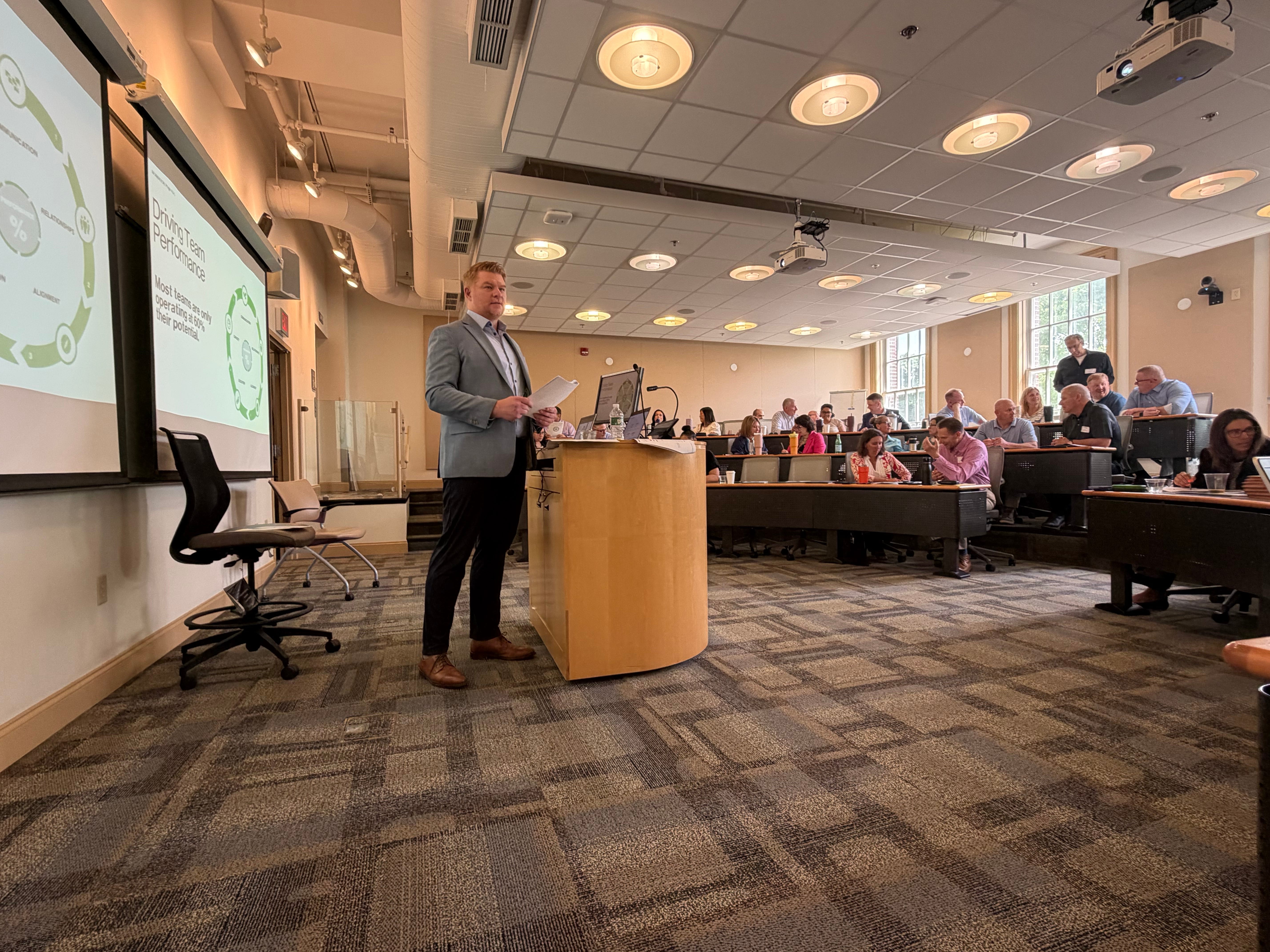
(Picture: Recent Workshop)
But there was one specific moment in the interview that made me pull the car over.
Interviewer Shawn Ryan asked Mel about the concept of surrender. Shawn admitted, “What does surrender even mean? I’ve never really understood it. I’m always thinking about the future, expectations, fears, all the things of life...” He paused, then offered a common conclusion: “Maybe it just means having no ambition?”
That’s where most high-performing leaders get stuck. We look at “surrender” and we see passivity (doing nothing) or fatalism (whatever happens, happens). We assume surrendering means throwing our whiteboards in the trash, parking the truck, and waiting for the rapture.
But Biblical surrender is highly active. It isn’t a loss of ambition; it’s a total relocation of authority. It requires three specific shifts:
1. From Ownership to Stewardship
Surrender means you give up the legal rights to yourself.
As Paul writes in 1 Corinthians 6:19–20, “You are not your own, for you were bought with a price.” If you are a faith-motivated leader, this is a massive operational tension. You love building, pushing, and making things happen. But true surrender means realizing you no longer own your time, your calendar, your business, your capital, your reputation, or even your kids. You are not the owner of the firm; you are a manager (a steward) of assets that belong entirely to the Crown.
2. From Self-Preservation to Self-Denial
The natural human instinct is to protect the “self” at all costs. Surrender breaks that mechanism.
Author Jamie Winship talks extensively about the twin traps of self-protection and self-promotion. If we are being brutally honest, how much of our daily leadership—our decisions, motives, strategic plans, hiring choices, and defensive reactions—is fueled by a desperate need to protect our own name?
Jesus steps into that sandbox and says, “If anyone would come after me, let him deny himself and take up his cross daily and follow me.” (Luke 9:23).
In the Roman world, carrying a cross wasn’t a metaphor for having a frustrating Tuesday or a difficult board meeting. A man carrying a cross was a convicted criminal walking to his execution. He had zero legal rights left. Surrender is agreeing with God’s verdict on the “Old Man” and refusing to protect what He has already bought.
3. From “Doing” to “Done”
The hardest thing for a driven executive to surrender isn’t their vices; it’s their righteousness. It’s their resume.
True surrender means stopping the exhausting, endless cycle of trying to perform for God to earn His favor, secure His blessing, or prove we belong in the room. It means surrendering self-reliance and resting entirely in what Christ has already done on the cross.
The Daily Architecture: Open Hands vs. Clenched Fists
Surrender isn’t just an abstract theological feeling; it has a highly distinct, physical architecture in how you run your organization on Monday morning.
The Clenched Fist: This is the posture of hoarding control. The internal soundtrack says, “I have to fix this culture, I have to secure this round of funding, I have to manage this crisis, because if I don’t, the whole thing falls apart.” The physical byproduct of the clenched fist is deep anxiety, micromanagement, and sleeplessness.
The Open Hand: This is the posture of true stewardship. It says, “Lord, these resources, this economic downturn, and this future belong to You. I will execute my strategic responsibilities today with maximum excellence (agency), but I leave the ultimate outcome entirely to You (authority).” We see the ultimate model of this architecture in the Garden of Gethsemane. Jesus, facing the physical and spiritual terror of the cross, explicitly names His desire while bowing His authority:
“Father, if you are willing, remove this cup from me. Nevertheless, not my will, but yours, be done.” (Luke 22:42)
Surrender looks like naming your reality honestly (“I want this cup removed; I want this problem solved”), but immediately anchoring your soul to the Sovereign design (“Nevertheless...”).
Reflect: Look at your leadership over the last week. Are you leading with clenched fists, trying to own the outcomes? Or are you operating with open hands, executing with excellence while letting God carry the weight?
Anytime you are ready to lead by design...
There are a few ways we can partner to build healthy, high-performing leaders at every level of your organization:
100X Foundations (The Lead by Design Intensive): Build the internal foundation required to carry a God-sized vision without losing your soul. A 12-hour, 1:1 deep dive into walking in God’s story, discovering your unique voice, and establishing healthy rhythms.
Executive Coaching: High-touch 1:1 partnership for faith-centered leaders pursuing both business excellence and spiritual formation.
The 5 Voices for Teams: Bring a world-class psychometric to your organization to ensure every voice is heard and valued, moving your culture from “People as Noise” to “People as Imago Dei.”
Altitude: Our group leadership development program designed to scale health and performance across your entire team.
Enterprise Solutions: Launch a full People Operating System (OS) across your entire organization, empowering every leader with the tools they need.